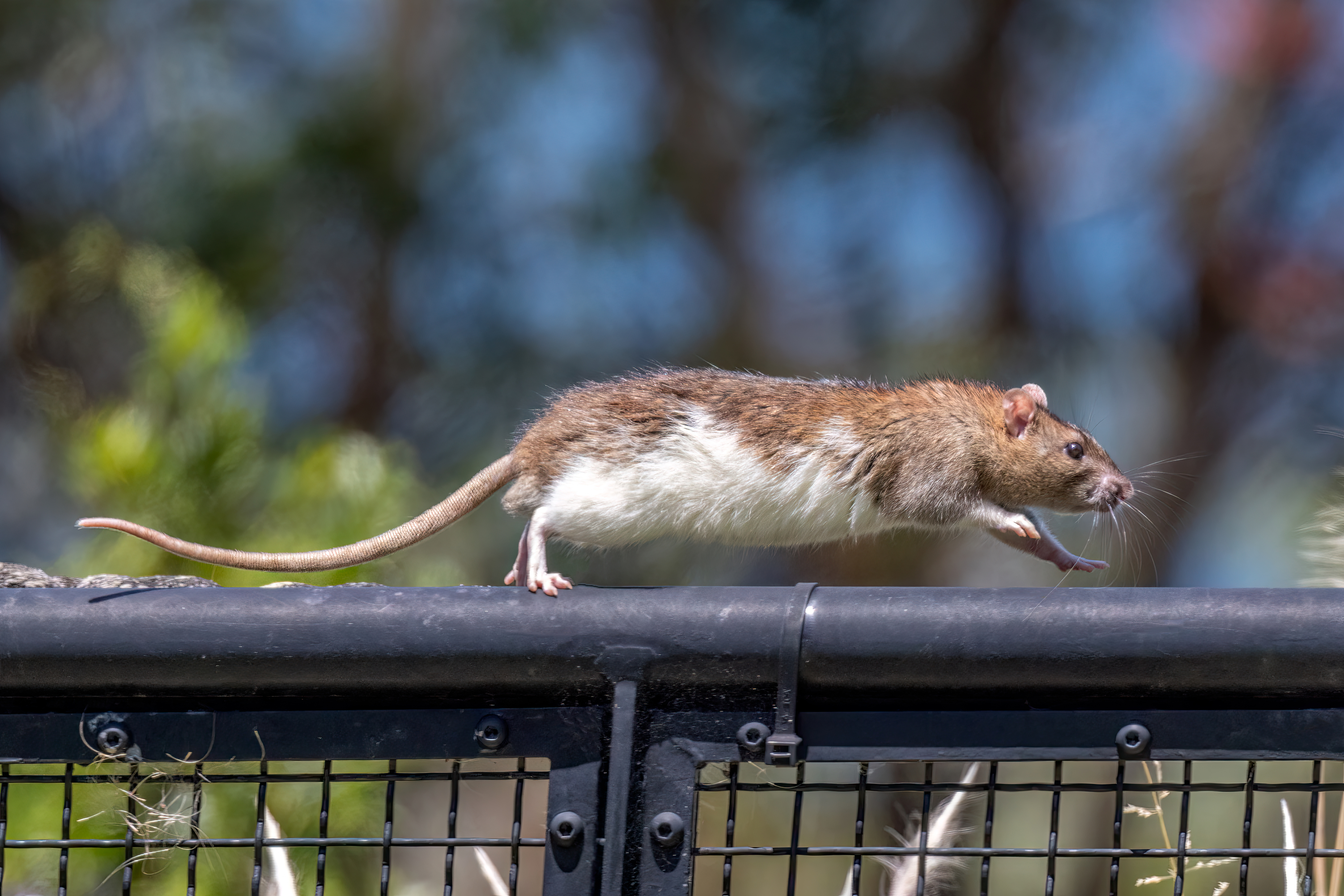
If you’ve lived in Southern Nevada for a while, you know our desert landscape is full of surprises. But few things will make you drop your morning coffee faster than looking out the window and seeing a rat casually tightrope-walking across the top of your cinder block backyard wall.
It’s a sight that leaves many homeowners asking: Are rats really that common out here in the desert?
The short answer is yes. While our native desert wildlife usually keeps its distance, invasive urban rats have completely adapted to the neighborhoods of Las Vegas, Henderson, Boulder City, and Pahrump. If you saw a rodent traveling along a wall or fence line, you aren’t alone—and there is a specific reason it was up there.
Meet the Roof Rat: Nevada’s High-Wire Acrobat
When people think of rats, they often picture the heavy, ground-dwelling sewer rats (Norway rats). But the acrobat on your wall is almost certainly a Roof Rat (Rattus rattus).
Unlike their ground-burrowing cousins, roof rats are built for high-altitude living. They are sleek, agile, and possess a long, hairless tail that is actually longer than their head and body combined, which they use like a gymnast's balancing pole.
Our local block walls and utility lines act like a private highway system for them. Roof rats hate traveling in the open at ground level where predators like owls, coyotes, or neighborhood dogs can get them. Traveling along the top of a wall gives them a safe, elevated route straight from their nesting sites (often in the untrimmed fronds of palm trees or dense desert landscaping) straight to your home.
The Desert Oasis Effect: Why Your Yard is a Magnet
Rats don’t just wander into your yard by accident; they are driven by the search for resources. In Nevada’s harsh, arid climate, a residential backyard is basically a five-star luxury resort. They are looking for three things:
Water: In the natural desert, water is scarce. In your backyard, landscape drip irrigation lines, swimming pools, pet water bowls, and even AC condensation lines provide a reliable, year-round drinking fountain.
Food: Roof rats love fruit and nuts. If you or your neighbors grow citrus, figs, pomegranates, or mesquite trees, you're providing an all-you-can-eat buffet. They are also highly attracted to backyard BBQ grease traps, birdfeeders, and outdoor pet food.
Shelter: Dense vegetation like overgrown bougainvillea, stacked firewood, and the dead thatch of untrimmed palm trees offer perfect, secure nesting spots.
How to Control Backyard Rats: A Professional Action Plan
If you spot a rat on your perimeter wall, it’s a warning sign that they are actively scouting your property for food or looking for a gap to move into your attic. Here is how you can take back control of your yard:
1. Disrupt the "Highway" (Landscaping Upgrades)
Rats use trees and overgrown bushes as bridges. Cut back any tree branches so they are at least 3 to 6 feet away from your roofline and away from your block walls. If you have palm trees, keep them skinned and trimmed; removing the dead "skirt" of fronds deprives roof rats of their absolute favorite nesting real estate.
2. Eliminate the Buffets and Fountains
Never leave pet food bowls outside overnight.
Keep tight lids on all trash cans and clean your BBQ drip trays.
Pick up fallen fruit from the ground immediately.
Check your drip system lines for leaks or pooling water.
3. Seal the Perimeter (Exclusion)
A rat only needs a hole the size of a quarter to squeeze into your home. Inspect your roofline, eaves, and vents. If you see construction gaps, missing vent screens, or openings where utility lines enter the stucco, seal them up using heavy-duty materials like steel mesh (copper stuff-fit) and outdoor sealant that teeth cannot chew through.
4. Smart Trapping Placement
Because roof rats prefer to stay off the ground, standard traps placed flat on the lawn often go untouched. Professionals target their actual travel paths. Traps secured safely along the tops of fences, on sturdy tree limbs, or right inside attic access points are far more effective.
A Warning on DIY Baiting: Putting out generic hardware store rat poison in an open yard is incredibly risky. Rogue rodents can drag the bait out, exposing neighborhood pets or native desert wildlife to secondary poisoning. Rodenticides should only ever be deployed inside secure, tamper-resistant locking bait stations.
When to Call in the Pros
Spotting one rat on a wall means there are likely more hiding nearby in the neighborhood. Because they reproduce incredibly fast, a single female can have multiple litters a year; a small backyard sighting can turn into an attic infestation before you know it. If you're tired of sharing your yard with unwanted acrobats, ANDERSON PEST CONTROL is here to help. Our team specializes in comprehensive rodent exclusion, structural shielding, and targeted trapping strategies tailored specifically to Southern Nevada's unique desert architecture. (702) 656-8898
Give us a call today, and let’s clear the rats off your walls for good!