
It’s a familiar Saturday morning scene in our valley. You’re enjoying a quiet cup of coffee, looking out at the yard, when you spot a bright neon vest or a branded truck rolling down the street.
Pest control trucks are as common in Southern Nevada as palm trees and block walls. In fact, if you live here, there’s a very high chance you already pay a capable, reliable company to come out every month or two, spray a quick liquid barrier around your foundation, shake your hand, and head on to the next house.
For years, that basic "spray-and-go" service was enough. But our desert is changing, pests are getting smarter, and a standard perimeter spray just doesn't cut it anymore.
Lately, you might have noticed something new on your block: the Anderson Pest Control truck is spending a lot of time at your neighbors' houses.
Neighbors aren't leaving their old companies because those companies are doing a bad job; they are upgrading because they realize their homes need a complete protective shield, not just a baseline barrier. Here is the story of why your neighborhood is making the switch to Anderson for full-service property protection—and a quick guide on how to spot a rising desert threat right beneath your feet.
The Tiny Terror: Harmless Desert Ant vs. Aggressive Fire Ant
To understand why local homeowners are upgrading their defense strategy, you only have to look at the ground. A major question our technicians get while walking properties in Henderson, Summerlin, and across the valley is: "How do I tell the difference between a harmless desert ant and an aggressive fire ant colony?” “How about Argentine verses Red Imported Fire Ant?”
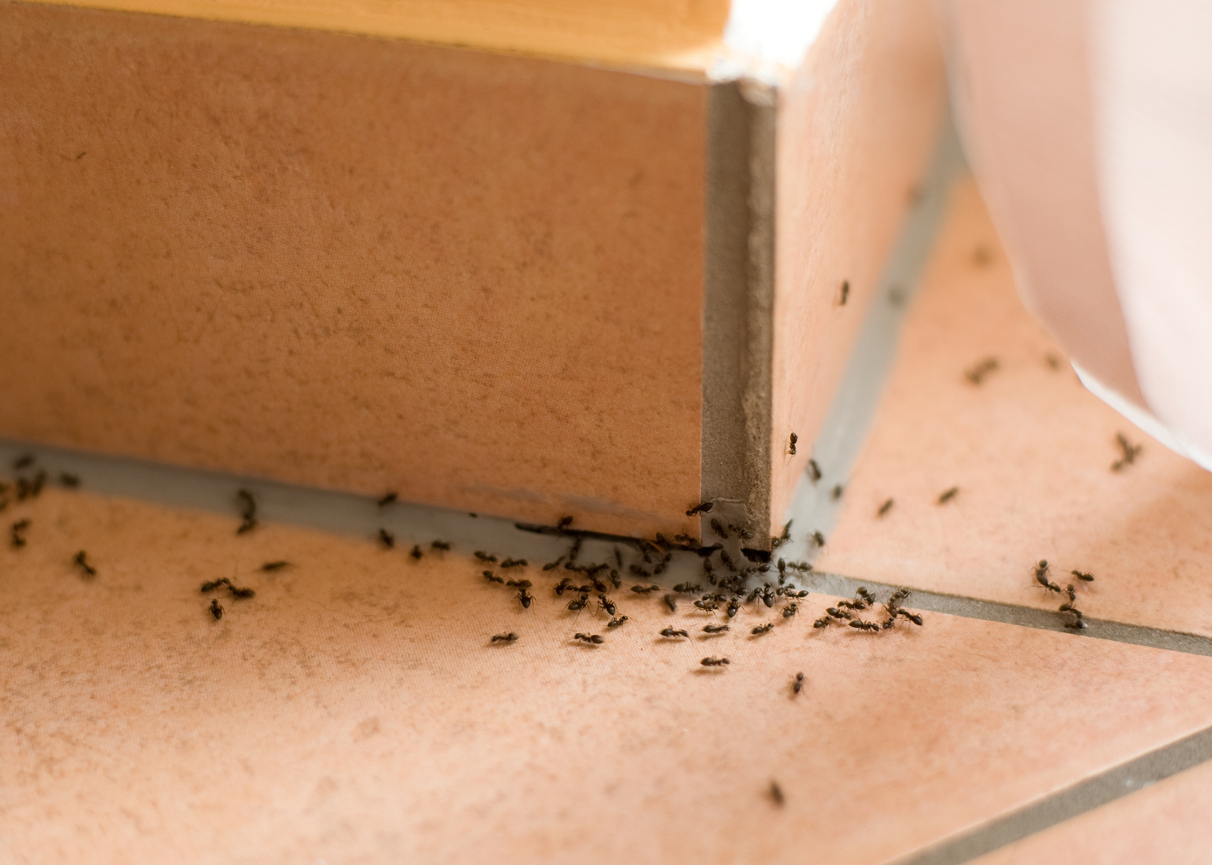
While both are highly invasive, non-native pests that wreak havoc on lawns, the Argentine ant and the Imported Fire ant utilize completely different strategies to conquer a property. Argentine ants are tiny, uniform, dull-brown insects that lack a sting entirely; instead, they rely on sheer numbers, forming massive, cooperative "mega-colonies" with multiple queens that travel in wide, unmistakable super-highways along concrete edges and irrigation lines to invade indoor spaces for moisture. Imported fire ants, by contrast, are reddish-bronze with dark abdomens, highly variable in size, and infamous for their hyper-aggressive nature. They construct chaotic, fluffy soil mounds in turf or near drip lines, and rather than just trailing into your kitchen, they actively defend their territory by swarming and delivering coordinated, incredibly painful, burning stings that leave itchy white pustules. In short, while Argentine ants are relentless, invasive foragers that take over your home by numbers, imported fire ants are aggressive, venomous defenders that lock down your yard by force.
Misidentifying the ants in your yard can be a painful mistake for your family and pets. Here is how to tell these ants apart instantly:
The Harmless Native: Southern Fire Ants & Desert Harvester Ants
The Look: While we do have a native species called the "Southern Fire Ant," they are generally a dull, amber-orange and dark brown mix. Desert Harvester ants are larger, reddish-orange, and slow-moving.
The Nest: Look for a classic, neat, volcano-shaped mound of dirt or gravel with a single, clear entry hole in the center.
The Behavior: These ants are docile. If you accidentally step near their nest, they will scurry to protect their eggs. They only bite or sting if you physically trap or squeeze them. They are a natural part of the desert ecosystem.
The Aggressive Invader: Imported Fire Ants
The Look: These are smaller, highly uniform in size, and feature a distinct, bright reddish-bronze head and thorax with a much darker, almost black abdomen.
The Nest: Their mounds are chaotic. They look like a messy pile of excavated, fluffy, loose soil with no clear central opening. They love moisture, frequently building these mounds right in the middle of lush turf grass, near drip irrigation emitters, or tucked tightly against concrete walkways and patio slabs.
The Behavior: Hyper-aggressive. If you disturb an imported fire ant mound, they won't run away. Within seconds, hundreds of ants will boil out of the ground, swarming upward onto whatever stepped on them. They use chemical pheromones to coordinate, waiting until the entire swarm is in place to unleash a simultaneous, incredibly painful, burning sting that leaves itchy white pustules.
   [ Desert Ant Mound ]                 [ Fire Ant Mound ]
     /\  (Single Hole)                    /\ /\  (Chaotic Pile)
    /  \                                 /  V  \ (No Main Hole)
   /____\                               /_______\
   Behavior: Docile, avoids conflict     Behavior: Swarms & attacks instantly
Why the Neighbors are Upgrading to Anderson
When aggressive invaders like fire ants—or roof-climbing pests like Arizona Bark Scorpions and spiders—move onto your block, a standard liquid spray at ground level isn't enough to protect your home.
Your neighbors are upgrading to Anderson's Full Property Protection Plan because we treat your property like a 3D fortress, safeguarding it from the deep soil lines all the way to the peak of your roof. Here is what our comprehensive shield includes that the competitors leave out:
1. Architectural Eave & Roofline Defense
Most companies stop spraying at waist height. But desert spiders and scorpions love to climb stucco walls, establishing nesting grounds right above your head.
De-Webbing & Nest Removal: We physically sweep your eaves, removing unsightly spider webs, wasp nests, and debris.
Pheromone Blockers: Pests leave invisible chemical trails (pheromones) that invite future generations to nest in the exact same spots. We use targeted treatments that break down these pheromones, erasing your home from the insect map.
Residual Dusting: We inject specialized, weatherproof residual dusts deep into the cracks and crevices around your rooflines, windows, eaves, and attic vents. This creates an invisible perimeter that stops climbing pests before they can squeeze into your attic or ceilings.
2. Full-Yard Subterranean Granular Barriers
Spraying liquid on desert landscaping looks good on day one, but the harsh Las Vegas sun and automated drip irrigation systems quickly wash it away or break it down.
The Granular Shield: Instead of just a thin line of liquid around the foundation, Anderson applies water-activated, slow-release protective granules across your entire yard—including rock beds, turf, and planters.
True Year-Round Protection: Every time your landscaping drips or a rare desert rain hits, these granules activate, releasing a fresh layer of defense deep into the soil where fire ants and scorpion food sources harbor. It provides a massive, deep-soil buffer zone that lasts for months, not days.
Experience the Anderson Difference
Your current pest control provider might be perfectly nice, but nice doesn't stop an aggressive fire ant colony from taking over your lawn or a bark scorpion from dropping from an eave onto your patio.
Don't wait for a breakdown in your current defense to realize your home needs more. Join the neighbors who have stepped up their property defense.
Don’t get stuck in the old fix…Make the switch to Anderson in ’26!
Contact Anderson Pest Control today to request a seamless transition to our Full Property Protection Plan. We make switching incredibly easy, and we will instantly upgrade your home to the highest standard of desert pest management available in Southern Nevada.