Imagine hosting a weekend barbecue in your Las Vegas backyard or stepping out into the garden, only to notice a steady stream of buzzing insects emerging directly from a hole in your landscape rock or lawn.
While many people associate wasps with visible paper nests hanging from house eaves or tree branches, some of the most aggressive stinging insects in the desert southwest live entirely underground.
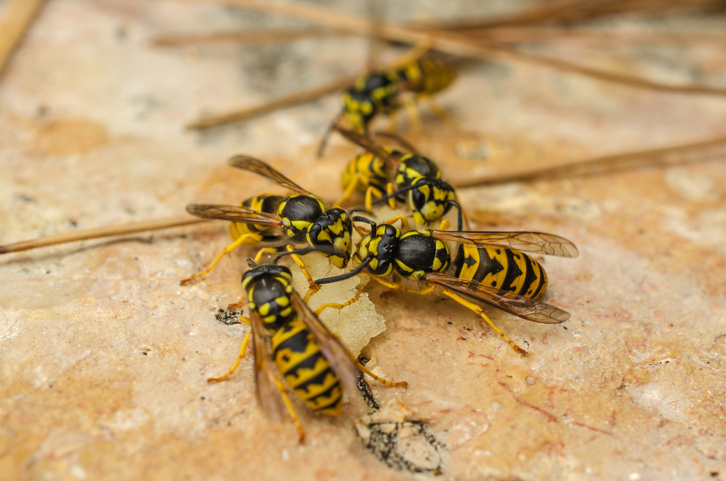
If you’ve spotted ground-dwelling yellowjackets around your Southern Nevada home, (Las Vegas, Henderson, Pahrump and Boulder City) you’re almost certainly dealing with the Western Yellowjacket (Vespula pensylvanica). Here is what you need to know about this specific desert pest and what you can do to protect your family and yard.
Meet the Culprit: The Western Yellowjacket
The Western Yellowjacket is by far the most dominant ground-nesting yellowjacket species in Southern Nevada and across the western United States.
How to Identify Them
Appearance: About 1/2 to 5/8 inches long with bold black-and-yellow bands across their abdomen. Up close, they feature a continuous yellow ring around their eyes, often referred to as wearing "yellow goggles".
Nesting Habits: Unlike paper wasps that build hanging umbrella-shaped nests, Western Yellowjackets are opportunistic ground nesters. They frequently take over abandoned rodent burrows, hollow voids under decorative desert gravel, retaining wall gaps, or irrigation boxes.
Behavior: They are notorious scavengers. Late spring through early autumn is peak season, when workers hunt aggressively for sugars and protein, making your pet food, soda cans, and outdoor meals prime targets.
Why Ground Yellowjackets are Especially Dangerous
Underground yellowjacket nests are uniquely hazardous for a few reasons:
Hidden Entrance Hazards: Because the nest is underground, homeowners often don't realize it's there until they accidentally step on the entrance or run a lawnmower or trimmer over it.
Extreme Defensiveness: Yellowjackets communicate via alarm pheromones. If a nest is disturbed, hundreds of worker wasps can emerge within seconds to defend the colony.
Repeated Stings: Unlike honeybees, yellowjackets do not lose their stingers after a single attack. A single insect can sting multiple times, delivering painful venom that can cause severe localized swelling or life-threatening allergic reactions in sensitive individuals.
What Homeowners Can Do: Prevention & Defense
While active underground nests require professional intervention, prospective clients can take active steps to lower the risk of yellowjackets colonizing their yard:
1. Eliminate Scavenging Attractions
Secure Trash Cans: Ensure outdoor garbage cans and recycling bins have tight-fitting lids. Wash bins out periodically to remove sugary juice residues.
Feed Pets Indoors: Never leave dog or cat food outside during daytime hours. Protein is the primary fuel yellowjackets use to feed their developing larvae.
Clean Up Outdoor Dining: Cover food during patio meals and clean up spills immediately.
2. Seal Potential Nest Sites
Fill Abandoned Burrows: Keep an eye out for old rodent holes or dirt voids around your property and fill them in promptly.
Inspect Irrigation Boxes: Valve boxes and subterranean valve covers are warm, moist, and sheltered—ideal real estate for a queen yellowjacket setting up a spring nest. Ensure lids fit snugly.
3. Spot the Warning Signs Early
Watch for "traffic lanes" in your yard: insects flying low to the ground and entering/exiting the exact same point in soil, gravel, or wall crevices.
What You Should NEVER Do with Ground Nests
When homeowners discover a ground nest, their first instinct is often to take matters into their own hands. Avoid these common DIY mistakes:
Do NOT pour gasoline, bleach, or boiling water down the hole. This is extremely hazardous to your soil, surrounding plant roots, and pets—and it rarely penetrates deep enough to destroy the queen inside the paper gallery.
The Professional Solution: Complete Underground Elimination
Because an underground yellowjacket colony can house thousands of aggressive workers by late summer, safe elimination requires specialized equipment and professional-grade treatments.
Anderson Pest Control's professional pest control service will:
Locate the True Nest Core: Identifying the exact subterranean cavity structure to ensure targeted application.
Inject Micro-Encapsulated & Dust Matrix Treatments: Using specialized pressure equipment to drive dust or aerosol formulations deep into the underground chambers, neutralizing the queen and the entire brood.
Provide Full Protective Equipment (PPE): Performing treatments safely without risking stings to your family or pets.
Offer Guaranteed Protection: Ensuring the colony is 100% eradicated with follow-up re-services if any activity persists.
Keep Your Yard Safe This Season
Don't let underground pests hold your patio or lawn hostage. If you suspect a yellowjacket nest has formed in your yard, contact your local family owned specialist, Anderson Pest Control today for a fast, safe, and complete flush-out treatment!
(702) 656-8898
Check out what hundreds of happy customers are saying about Anderson Pest Control or visit us online www.controlthebugs.com
We are slowly growing our social media following too.
Like and follow us today @andersonpestcontrol_lv
It's friends like you who help us grow!