When people think of Las Vegas wildlife, they usually think of scorpions, spiders, or wild burros out in Red Rock. But there’s a much smaller, incredibly organized neighbor that causes headaches for homeowners across the Valley every single year: ants.
While our Las Vegas Desert landscape looks dry and harsh, Las Vegas is actually a paradise for several ant species. When the summer heat cranks past 110∘F or the winter months cool down, your temperature-controlled, moisture-rich home looks like a five-star resort to a scouting worker ant.
Here is everything you need to know about the ants invading your kitchen, why they are there, and how to get rid of them for good.
1. Meet the Usual Suspects: Common Las Vegas Ants
Not all ants are the same, and knowing what you're dealing with changes how you fight them. The most common species found in Southern Nevada include:
Argentine Ants: Shiny, dark brown, and relatively small. They love water and are notorious for building massive "supercolonies" that connect multiple properties.
Odorous House Ants: Also known as "sugar ants." If you crush one and notice a weird, chemical smell resembling rotten coconuts, you’ve got these.
Harvester Ants: Large, reddish-brown ants that build massive mounds in desert soil and gravel yards. They rarely come inside, but they have a incredibly painful sting if you accidentally step on their nest.
Carpenter Ants: Large and dark, these ants don't actually eat wood, but they will hollow out damp or compromised wood to build their nests, causing real structural damage over time.
Pavement Ants
2. The Secret Behind the Trail: Why They’re in Your House
At first glance, a small line of ants on your kitchen counter might seem like a brand-new issue. The reality? What you see is only about 10% of the actual problem.
Ants operate on a sophisticated system of chemical pheromone trails.
[Scout Ant Finds Food/Water] ──> [Lays Pheromone Trail] ──> [Colony Follows Route]
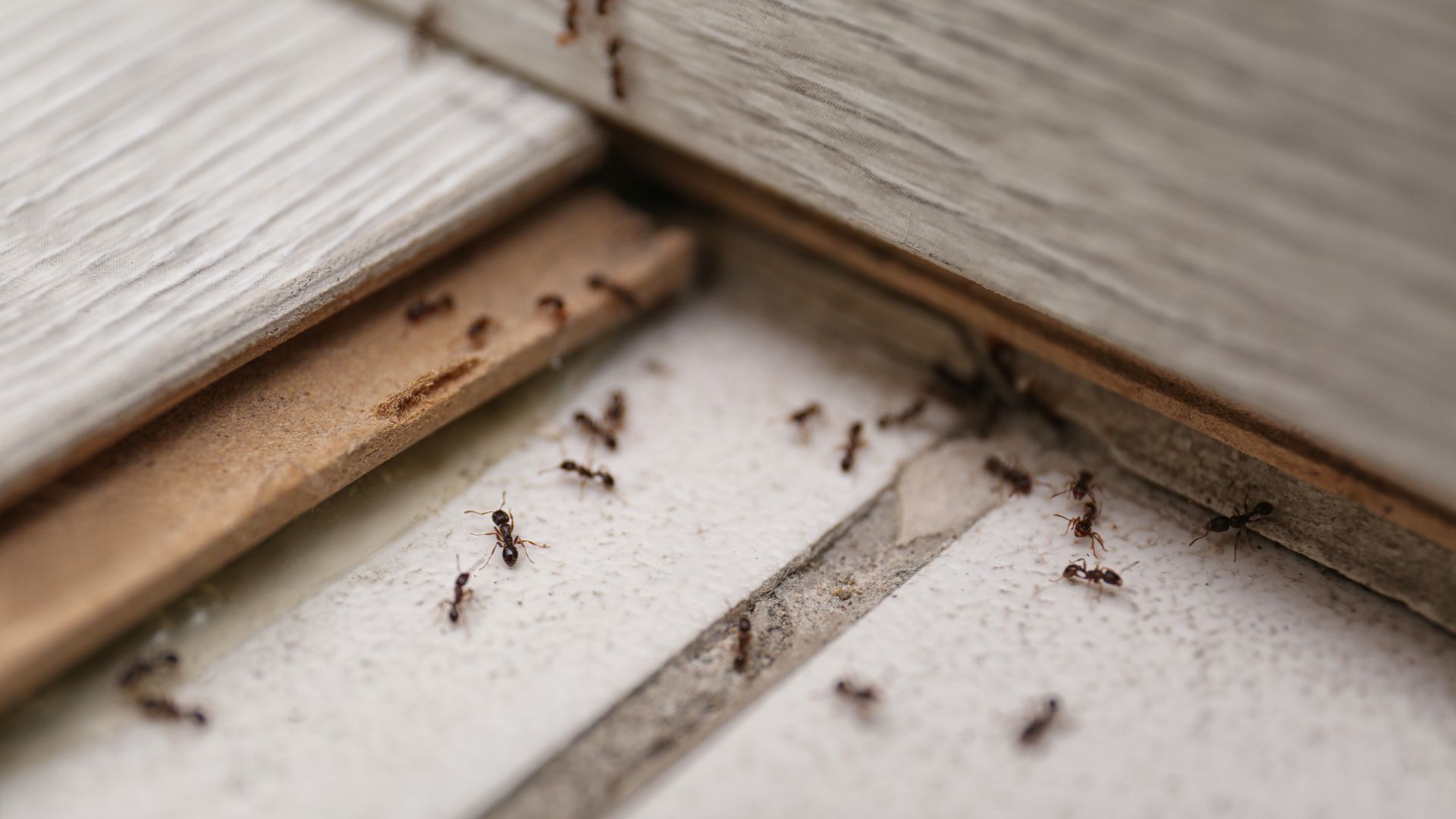
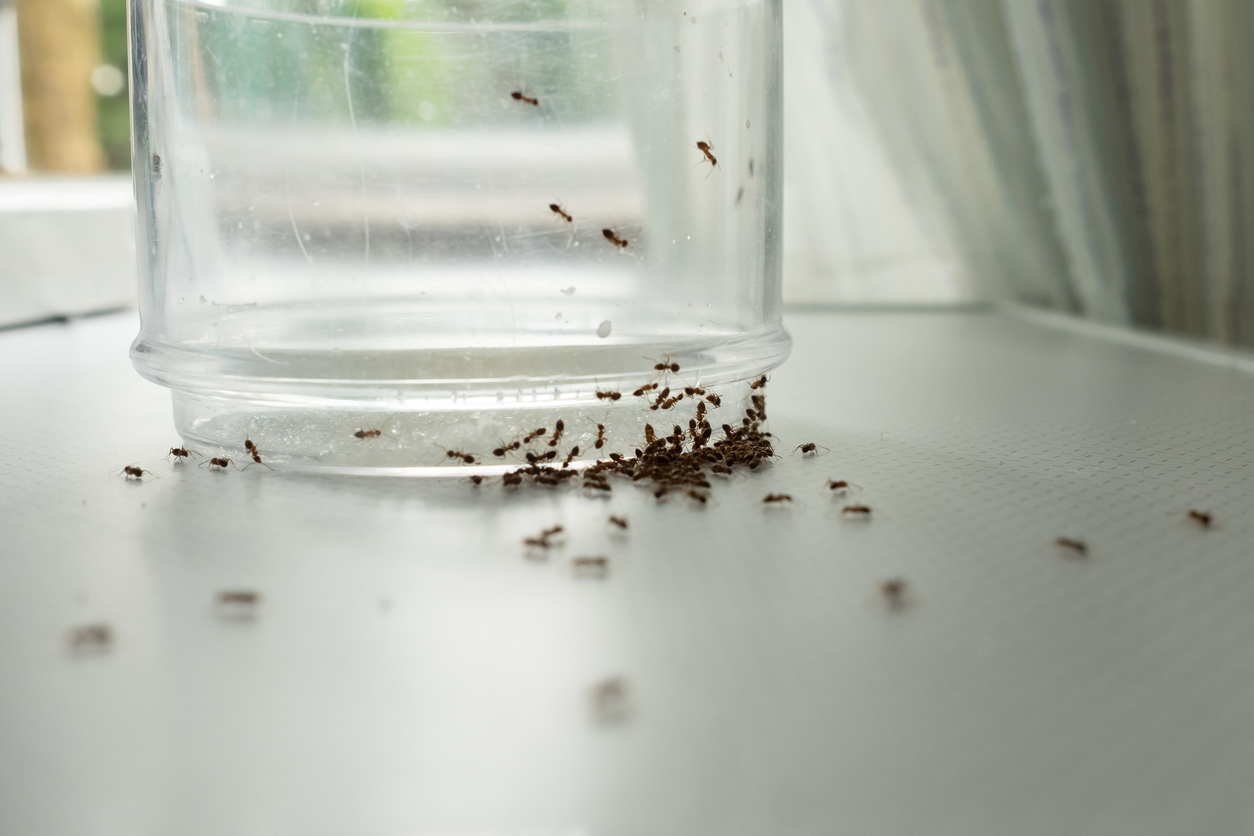
When a single scout ant finds a drop of spilled soda or a leaky pipe under your sink, it runs back to the nest while leaving an invisible chemical scent trail behind it. Within hours, hundreds of worker ants are following that exact same highway straight into your pantry. Wiping away the visible ants doesn't work because the invisible scent chemical remains, telling the rest of the colony exactly where to go.
3. The Right Way to Fight Back
If you have an active ant invasion, your instinct might be to grab a heavy-duty chemical spray. Don't do it.
Instant-kill sprays only kill the ants you can see. Even worse, certain species (like Argentine ants) will sense the threat, enter a survival mode called "budding," and split their single colony into three or four separate nests inside your walls—making your problem drastically worse.
Instead, follow this systematic approach to eliminate the entire colony:
1. Identify the Trail
Watch where the ants are traveling. Do not disturb them yet. Find out if they are coming from a window sill, an electrical outlet, or a gap under the baseboards.
2. Deploy Slow-Acting Baits
Place enclosed liquid or gel ant baits (like Borax-based or Indoxacarb baits) near the trail, but not directly on top of it.
3. Let Them Feast
This is the hardest part: leave the ants alone. You will see more ants over the next 24 hours. They need to safely eat the bait and carry it back down into the underground nest to feed the queen.
4. Erase the Scent Highways
Once the ant activity stops (usually within 3 to 7 days), scrub down the entire area with a 1:1 mixture of white vinegar and water. The acid completely neutralizes their pheromone trails so future scouts can't find the old route.
Proactive Prevention Tips for the Las Vegas Desert
To keep ants out of your home before they ever cross your property line, make your yard and kitchen as inhospitable as possible:
The Golden Rule of Pest Prevention: If you eliminate their access to water, you eliminate 90% of your pest problems in Las Vegas.
Check Your Irrigation: Fix leaky drip lines or pooling water around your desert landscaping rock beds.
Trim the Foliage: Ensure tree branches and desert shrubs do not touch the exterior walls of your house. Ants use these branches like bridges to bypass ground-level barriers.
Seal the Envelope: Use silicone caulk to seal up hairline cracks around exterior window frames, doors, and stucco utility pass-throughs.
Don’t Fight the Trail Alone—Call the Experts
If you’re already seeing a steady march of ants across your kitchen tile, the colony deep beneath your foundation has already won the first round. Instead of wasting time and money on over-the-counter sprays that only make the problem scatter and split, let the team at Anderson Pest Control handle it the right way. Our dedicated Las Vegas ant specialists don't just treat the surface; we provide a detailed and thorough application that targets the root of the colony, erasing scent trails and creating a lasting barrier around your home. Keep your kitchen yours, please contact Anderson Pest Control today to get a specialized technician out to protect your property. (702) 656-8898 or visit is online at www.controlthebugs.com